When 'Equal' Is Just a Word in the Pitch Deck
The pitch always sounds the same. "We'd love to do this together — totally equal collaboration, full creative partnership, both our names on everything." It sounds good. It feels good. And if you're earlier in your career than the person saying it, it can feel like a genuine vote of confidence, like someone with real leverage is choosing to share the table with you.
Sometimes that's exactly what it is. But sometimes — more often than anyone in this industry likes to admit — "equal partnership" is a frame that starts shifting the moment the project kicks off. And by the time you notice it, you're deep enough in that walking away feels like the bigger loss.
This isn't a cynical take on collaboration. Collaboration is genuinely one of the most powerful things about creative work. But there's a version of it that's actually just extraction with better branding, and learning to tell the difference before you sign anything is a skill worth developing.
The Invisible Hierarchy You Both Walked In With
Here's the thing about creative partnerships: they almost never start on a level playing field, even when both people genuinely intend them to. One person almost always has more followers, more industry relationships, more established credibility, or more financial leverage. Those asymmetries don't disappear just because you agreed to call the project equal.
What happens instead is that the imbalances go underground. They stop being acknowledged out loud and start operating through the structure of the collaboration itself. The person with more platform makes the calls about where the project gets announced. The person with more industry connections decides which press opportunities to pursue. The person with more money has an implicit veto over any direction that requires additional investment.
None of this gets written down anywhere. Nobody has a meeting where they say "actually, I'm going to be the one making the real decisions here." It just... happens. And if you're the person with less leverage going in, you can end up doing a significant portion of the creative work while the other person does a significant portion of the decision-making — which is not, by any reasonable definition, equal.
The Three Scenarios Where This Gets Ugly
Scenario one: the established-emerging dynamic. An established creator partners with an emerging one, often framed as a mentorship-adjacent opportunity. The emerging creator brings energy, ideas, and a perspective the established one wants access to. The established creator brings reach and credibility. On paper it sounds complementary. In practice, the emerging creator's contributions often get absorbed into the established creator's brand without equivalent credit. The project lives on the bigger platform, gets attributed to the bigger name in most coverage, and the emerging creator walks away with a portfolio credit that's harder to monetize than they expected.
Scenario two: the idea originator problem. One person brought the original concept. The other person brought the execution, the connections, or the funding to make it real. When the project succeeds, the question of who "really" created it becomes genuinely contested — and without documentation, it usually gets answered in favor of whoever has more public visibility.
Scenario three: the scope creep split. The collaboration starts clearly defined. Then it expands, as projects do. And as it expands, the additional work doesn't get distributed equally — it accumulates on the person who's more available, more eager to please, or less willing to push back on new requests. By the end, one person has done 70% of the work and both people still own 50% of the credit. Except, again, the person with more platform will likely get 70% of the public attribution anyway.
What the Contract Doesn't Say (But Should)
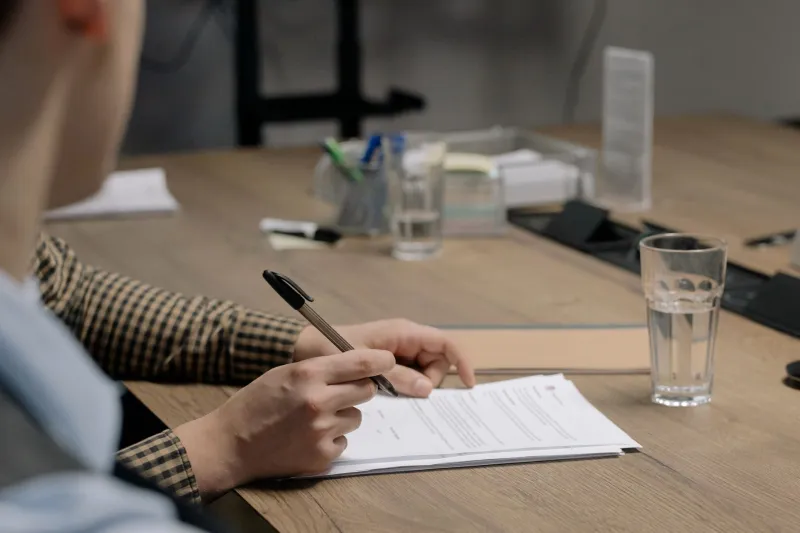
Most creative collaboration agreements, when they exist at all, cover the basics: revenue splits, deliverable timelines, what happens if someone wants to exit. What they almost never cover is credit — specifically, how credit gets allocated across different contexts.
There's a difference between being listed as a co-creator in the project itself, being credited in press coverage, being tagged on social media posts, and being acknowledged in future projects that build on this one. You can have your name technically attached to something and still be effectively invisible to the audiences that matter.
If you're going into a collaboration where credit is important to you — and if you're building a creative career, it should always be important to you — push for explicit language around it. Not just "both names on the project" but: both names in all press materials, both names in social promotion, a mutual agreement not to reference the work in future contexts without acknowledging the other contributor.
This might feel overly formal for what's supposed to be a creative partnership between people who trust each other. But the need for this kind of specificity has nothing to do with trust. It has everything to do with the fact that good intentions don't survive busy schedules, shifting priorities, and the way attribution naturally gravitates toward whoever is doing the talking.
Early Signals Worth Paying Attention To
Before you're deep in a collaboration, there are usually signs that the "equal" framing is already starting to bend. The other person consistently makes decisions without checking in first. Your ideas get incorporated without being attributed to you, even in internal conversations. The timeline and format keep shifting based on their schedule, not yours. You find yourself doing more explaining and justifying than they do.
None of these signals is necessarily a dealbreaker on its own. But if you're seeing several of them in the early stages of a project, that's the time to have a direct conversation — not later, when there's more at stake and more sunk cost on both sides.
The conversation doesn't have to be confrontational. It can be as simple as: "I want to make sure we're both feeling good about how this is working. Can we check in on how decisions are getting made and whether we want to adjust anything?" That kind of check-in, done early, is a lot easier than trying to renegotiate power dynamics six months into a project.
Collaboration Is Still Worth It
None of this is meant to make you walk into every partnership with your guard up and a lawyer on speed dial. Most creative collaborations — even imperfect ones — produce work that neither person could have made alone, and that's genuinely valuable.
But the best collaborations I've ever seen or been part of share one thing: both people were willing to be explicit about what they needed, what they were contributing, and what they expected in return. They didn't rely on "equal" as a shorthand for a conversation that actually needed to happen.
Go in with your eyes open. Document more than you think you need to. And remember that advocating for yourself in a partnership isn't a sign of distrust — it's a sign that you take the work seriously enough to protect it.